State should not be forcing districts to spend down their budget reserves
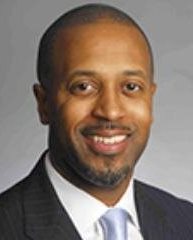
Vernon Billy
The governor and Legislature are preparing to corroborate budget linguistic communication that severely limits the amount of funding school districts tin maintain in their local reserves for economic uncertainties.
Both the Association of California School Administrators and California Schoolhouse Boards Association, representing superintendents, school boards and county boards of education, vehemently oppose this fiscally irresponsible proposal, as it is inconsistent with the principle of subsidiarity – a key principle of the land'southward new Local Control Funding Formula. It also discounts the critical role that prudent upkeep reserves play in the power of local educational agencies to maintain instruction programs during economic downturns.
Education is not solely a "state" program. It is governed, administered and provided by local schoolhouse districts with locally elected governing boards and community engagement.
Should voters approve the State Rainy Day Fund ballot measure (Assembly Constitutional Subpoena 1 or ACA ane) in November, schoolhouse districts would be forced to spend downwardly excess reserves whenever the state deposits coin into its own state-level school reserve. The intrusive requirement would effectively impose an absolute cap of twice the state minimum standard of 3 percent that almost every school commune would be allowed to maintain for economical uncertainties.
-
Wes Smith
The proposal is fiscally irresponsible.

To enact these provisions is fiscally irresponsible and in conflict with the principles articulated by the Legislature in placing ACA one on the election. For near of the terminal 2 decades, California worked to prevent school commune bankruptcies by enacting laws requiring multiyear projections, enforcement of strict fiscal standards by county offices of education, early intervention, and even the say-so to override the spending decisions of local governing boards. It is therefore ironic that, at the very fourth dimension an initiative has been placed on the statewide ballot to strengthen the land's rainy day fund, the Legislature would consider statutory changes eviscerating provisions at the local school district level that are based on the same premise of fiscal prudence and responsibleness. The creation of a state Proposition 98 reserve does not eliminate the need for prudent local reserves.
- The proposal fails to recognize the critical role that prudent budget reserves play in the ability of school districts to maintain fiscal solvency .
For about districts, a 3 percent reserve requirement represents only six to eight days of payroll. This proposal would allow for a 6 percent reserve, which equals 3 weeks of payroll. Districts at the minimum level of reserves are vulnerable to whatever unanticipated financial developments, such as those currently facing districts in the form of increased contributions to CalSTRS and CalPERS, and ascension healthcare costs due to the Affordable Care Act.
The governor'due south proposed increases in CalSTRS alone volition phase in higher employer contribution rates for the next seven years: going from eight percent to 19 percentage, equating to $threescore per pupil starting in the 2014-15 fiscal yr. This is more than the increased level of funding many districts volition receive via the new funding formula and volition have major implications as boards are finalizing budgets and LCAPs. With last-minute surprises like this, information technology is essential that districts have tools at their disposal to effectively manage their budgets in the short and long term.
- The proposal ignores recent history
Simply put, many school districts were able to survive the bully recession but through prudent direction of budget reserves. Prudent reserves allowed districts to avoid having to make fifty-fifty greater cuts to educational programs and reductions to certificated and classified staff due to budget reductions and deferrals.
This year the governor and the leaders of the Senate and Associates have eloquently articulated the demand for California to strengthen its rainy mean solar day fund. Every bit they have all noted, California revenues are volatile and, in many years, uncertain. Those uncertainties inevitably trickle downwardly to school districts, and it is unclear why the state would propose a reserve policy for school districts that is entirely counter to the one existence considered for the state.
Last, we object to the process by which this language is being considered. This language was not proposed in the governor'due south January upkeep or the May Revision, and has non been discussed in whatever public hearing in either legislative house. The proposed language represents a permanent, significant financial and policy shift in education finance which should be publicly vetted before the language is voted on by the Legislature.
…
Vernon Billy isouth the CEO and Executive Director of the California School Boards Clan. Wes Smith is the Executive Director of the Association of California School Administrators.
EdSource welcomes commentaries representing diverse points of view. The opinions expressed in this commentary represent those of the authors. If yous would like to submit a commentary for EdSource Today, please contact us.
To get more reports like this one, click hither to sign up for EdSource's no-price daily email on latest developments in education.
penningtonseneiver.blogspot.com
Source: https://edsource.org/2014/state-should-not-be-forcing-districts-to-spend-down-their-budget-reserves/63188
0 Response to "State should not be forcing districts to spend down their budget reserves"
Post a Comment